Ontario Teachers’ Pension Gets Into Wine

The Ontario Teachers’ Pension Plan has added wine to its portfolio.

The pension fund bought Constellation Brands Inc.’s wine business for a reported $780 million, according to a statement on Monday.

More from Bloomberg:

Ontario Teachers’, Canada’s third-biggest pension fund, said it will be partnering with the existing management team at Constellation Brands Canada, including CEO Jay Wright.

The business is “an ideal addition to our consumer portfolio,” Jane Rowe, Ontario Teachers’ senior vice president of private capital, said in a separate statement. “The company is already the undisputed market leader in the Canadian wine industry and has excellent potential for continued growth and value creation.”

Even as it offloads the Canadian business, Constellation is shoring up its lineup of pricier wines. The company announced Monday that it had agreed to acquire the Charles Smith collection of five super- and ultra-premium wines for about $120 million. Constellation also completed the purchase of High West Distillery and bought a minority stake in Bardstown Bourbon Co.

Constellation has called itself Canada’s leading wine company.

Wells Fargo Cross-Selling Scandal Leads to ERISA Class Action

A participant in Wells Fargo’s 401k plan filed a proposed class action suit last week (Oct. 7), accusing the bank of allowing employees to continue investing their retirement savings in company stock despite knowing the price was artificially inflated due to the now-uncovered cross-selling scheme.

Roughly one-third — $12 billion – of Wells Fargo’s 401k assets are invested in its own stock.

Wells Fargo has dominated headlines this month after it was discovered its commercial banking unit was engaging in a cross-selling scheme in which customers were signed up for unauthorized accounts and products.

Since the news broke, of course, the stock has taken a 10% hit.

Does the suit have a chance? Bloomberg BNA explores:

According to the complaint, Wells Fargo’s stock price nearly doubled during the six-year period of increased cross-selling, before dropping in value once news of the scheme broke.

If recent court rulings are any indication, Wells Fargo plan participant Francesca Allen may face an uphill battle in her attempt to hold the company liable under ERISA. In the past month alone, courts have rejected similar challenges against BP Plc, Whole Foods Corp. and RadioShack Corp. In all three cases, the courts found that employees failed to overcome the high bar recently set by the U.S. Supreme Court for cases challenging stock losses under ERISA.

This most recent suit seeks to hold Wells Fargo liable for losses suffered by as many as 350,000 participants in the company’s 401(k) plan, which holds assets of about $35 billion. In addition to regulatory fines and stock losses, the complaint asserts that the company’s alleged misdeeds have led to significant lost business and “untold reputational damage.”

The Supreme Court ruling mentioned above is FIFTH THIRD BANCORP ET AL.v. DUDENHOEFFER ET AL., which removed one set of guidelines for stock-drop cases like this one, and imposed another. But the new guidelines aren’t turning out to be any more plaintiff-friendly than the last.

Pensions & Investments explains:

The guidelines in a landmark Supreme Court ruling on stock-drop cases are turning out to be almost as tough on plaintiffs as the standard the court nullified.

[…]

In that ruling, the Supreme Court nullified a defense known as the “presumption of prudence,” which was based on a 1995 Philadelphia federal appeals court ruling. This defense enabled sponsors to convince most judges that lawsuits should be dismissed at the initial pleading stage rather than at the trial stage. In doing so, companies avoided the heavy expenses of pretrial discovery and/or the trial itself.

In its place, the court issued guidance to lower courts to determine whether they should accept or dismiss a stock-drop case based on fiduciaries’ administering company stock funds in defined contribution plans. So far, ERISA attorneys say, the ruling appears to have been stricter than originally believed.

[…]

The Dudenhoeffer ruling “certainly has caused the plaintiffs to think twice and be more conservative in their decisions” to sue sponsors, said Nancy Ross, a partner at Mayer Brown, Chicago.

Are Public Pensions Bulletproof?

Leo Kolivakis is a blogger, trader and independent senior pension and investment analyst. This post was originally published at Pension Pulse.

Mary Williams Walsh of the New York Times reports, $1.6 Million Bill Tests Tiny Town and ‘Bulletproof’ Public Pensions:

Until the certified letters from Sacramento started coming last month, Loyalton, Calif., was just another hole in the wall — a fading town of just over 700 that had not made much news since the gold rush of 1849. Its lifeblood, a sawmill, closed in 2001, wiping out jobs, paychecks and just about any reason an outsider might have had for giving Loyalton a second glance.

“It’s a walking ghost town,” said Don Russell, editor of the 163-year-old Mountain Messenger, a local newspaper that refuses, fittingly, to publish on the web.

But then came those letters, thrusting Loyalton onto center stage of America’s public pension drama. The California Public Employees’ Retirement System, or Calpers, said Loyalton had 30 days to hand over $1.6 million, more than its entire annual budget, to fund the pensions of its four retirees. Otherwise, Loyalton stood to become the first place in California — perhaps in the nation — where a powerful state retirement system cut retirees’ pensions because their town was a deadbeat.

“I worked all those years, and they did this to me,” said Patsy Jardin, 71, who kept the town’s books for 29 years, then retired in 2004 on an annual pension of about $48,000. Now, because of Loyalton’s troubles, Calpers could cut it to about $19,000.

“I couldn’t live on it — no way,” she said. “I can’t go back to work. I’m 71 years old. Who’s going to hire me?”

Public pensions are supposed to be bulletproof, because cities — unlike companies — seldom go bankrupt, and states never do. Of all the states, experts say, California has the most protective pension laws and legal precedents. Once public workers join Calpers, state courts have ruled, their employers must fund their pensions for the rest of their careers, even if the cost was severely underestimated at the outset — something that has happened in California and elsewhere.

Across the country, many benefits were granted at the height of the 1990s bull market on the faulty assumption that investments would keep climbing and cover most of the cost. And that flawed premise is now hitting home in places like Loyalton.

There and elsewhere, local taxpayers are paying more and more, and some elected officials say they want to get off the escalator. But Calpers is strict, telling its 3,007 participating governments and agencies how much they must contribute each year and going after them if they fail to do so. Even municipal bankruptcy is not an excuse.

The showdown in Loyalton is raising the possibility that California’s pension promise is not absolute. There may be government backstops for bank failures, insurance collapses and pensions owed to workers by bankrupt airlines and steel mills — but not, apparently, for the retirees of a shrinking town.

“The State of California is not responsible for a public agency’s unfunded liabilities,” said Wayne Davis, Calpers’s chief of public affairs. Nor is Calpers willing to play Robin Hood, taking a little more from wealthy communities like Palo Alto or Malibu to help luckless Loyalton. And if it gave a break to one, other struggling communities would surely ask for the same thing, setting up a domino effect.

Some see a test case taking shape for Loyalton and for other cities with dwindling means. “Nobody has forced this issue yet,” said Josh McGee, vice president for public accountability for the Laura and John Arnold Foundation, which focuses in part on sustainable public finance, and a senior fellow of the Manhattan Institute.

When Stockton, Calif., was in bankruptcy, for instance, the presiding judge, Christopher M. Klein, said the city had the right to break with Calpers — but it could not switch to a cheaper pension plan without first abrogating its labor contracts, which would not be easy. Stockton chose to stay with Calpers and keep its existing pension plans, cutting other obligations and pushing through the biggest sales tax increase allowed by law.

Loyalton — which sits in a rural area of Northern California near the Nevada border, less than an hour’s drive from Reno — severed ties with Calpers three years ago. It has no labor contracts to break. Though the town is not bankrupt, its finances are in disarray: It recovered more than $400,000 after a municipal employee caught embezzling was fired. But a recent audit found yet another shortfall of more than $80,000.

“If a city doesn’t have the funds to pay, it’s just completely unclear how the legal plumbing would work,” Mr. McGee said. “I don’t know what would happen if the retirees sued.”

The retirees say they are open to filing a suit but cannot afford to hire lawyers for a titanic legal clash with Calpers.

“Nobody does squat for you with Calpers,” said John Cussins, Loyalton’s retired maintenance foreman, who now serves on the City Council. “I contacted every agency possible. To me, it’s just unbelievable that there isn’t some kind of help out there with the legal side of things. It leaves us at the mercy of the city and Calpers.”

Mr. Cussins said he had a severe stroke last year and was recently told he had Parkinson’s disease. He needs continuing care and said he might not be able to afford his health insurance if his pension were cut. Every time the pension issue comes up at City Council meetings, he is told to leave because, as a retiree, he is deemed to have a conflict of interest.

“I’d like to see somebody go to jail for this,” he said.

Calpers has total assets of $290 billion, so an unpaid bill of $1.6 million would hardly be a deathblow. But if Calpers gave one struggling city a free ride, others might try the same thing, causing political problems. Palo Alto may have lots of money, but its taxpayers still do not want to pay retirees who once plowed the snow or picked up the trash in far-off Loyalton.

“I think this is all about precedent setting,” Mr. McGee said.

In September, Calpers sent “final demand” letters to Loyalton and two other entities, the Niland Sanitary District and the California Fairs Financing Authority. The Niland Sanitary District has struggled with bill collections, and the fairs financing authority was disbanded several years ago when the state cut its funding. Both entities stopped sending their required contributions to Calpers in 2013 but have continued to allow Calpers to administer their pension plans.

In Loyalton, the City Council voted in 2012 to drop out of Calpers, hoping to save the $30,000 a year or more that the town had previously sent in, said Pat Whitley, a former mayor and a City Council member. (She is not one of the four Loyalton retirees but earned a Calpers pension through previous work on the Sierra County Board of Supervisors.)

“All our audits said that our benefits were going to break the city,” Ms. Whitley said. “That’s exactly why we decided to withdraw. We decided it would be a perfect time to get out, because everybody was retired.”

Loyalton did not plan to offer pensions to new workers, she said. And it had been paying its required yearly contributions to Calpers, so officials thought its pension plan must be close to fully funded.

But Calpers calculates the cost of pensions differently when a local government wants to leave the system — a practice that has caught many by surprise. If a city stays, Calpers assumes that the pensions won’t cost very much, which keeps annual contributions low — but also passes hidden costs into the future, critics say. If a city wants to leave, Calpers calculates a cost that doesn’t rely on any new money and requires the city to pay the whole amount on its way out the door.

That is why Calpers sent Loyalton the bill for $1.6 million.

“I never dreamed it was going to be that, ever. Ever!” Ms. Whitley said. “It defies logic, really.”

Loyalton’s expenditures for all of 2012 were only $1.2 million, and much of that money came from outside sources, like the federal and county governments. Local tax collections yielded just $163,000 that year, according to a public finance website maintained by the Stanford Institute for Economic Policy Research.

Ms. Whitley said Calpers had snared Loyalton in a Catch-22. The agency would not tell the town the cost of terminating its contract until the contract was ended, she said. But once that was done, it was too late to go back.

“We were very confused about why we owe $1.6 million, and why didn’t they tell us that before we signed all the papers,” she said.

Mr. Davis, the Calpers spokesman, said that since 2011, Calpers had been giving its member municipalities a “hypothetical termination liability” in their annual actuarial reports, so there was little excuse for not knowing.

Ms. Whitley disagreed. “It’s just too confusing,” she said. “I looked at what’s been happening with all the other entities, and I saw that eventually it’s got to collapse. It’s almost like a Ponzi scheme.”

The bill was due immediately, but Loyalton did not pay it. It has been accruing 7.5 percent annual interest ever since.

Meanwhile, Calpers has continued to pay Loyalton’s four retirees their pensions. But at a Calpers board meeting in September, some trustees said it was time to find Loyalton in default and cut the pensions. The board is expected to make a final decision at its next meeting, in November.

In Loyalton, Mr. Cussins, the retiree and City Council member, said he was so frustrated about being barred from the council’s pension discussions that he and another former town worker drove to Sacramento to attend Calpers’s last board meeting.

The trustees were cordial, he said, but they held out little hope.

“We had a bunch of them come and shake our hands,” he said. “I said, ‘We need some guidance.’ They told us the city could apply to get back into Calpers next spring. But they made it very clear that they will not allow the city to get back into Calpers until that $1.6 million is paid.”

First, let me thank Ray Dragunas for bringing this article to my attention on LinkedIn. Second, while many of you would dismiss this as an inconsequential “small town USA” case of a few retirees who will end up seeing their pensions slashed by CalPERS, you are gravely mistaken.

As Mary Williams Walsh astutely remarks in her article, Loyalton has been thrust onto center stage of America’s public pension drama and this showdown is raising the possibility that California’s pension promise is not absolute. This is particularly worrisome given California’s pension gap is widening and could bring about major changes to public sector pensions there.

And while Loyalton lacks the resources to fight CalPERS, if other cases develop where public sector retirees get screwed on their promised pensions, don’t be surprised if we get massive class action lawsuits (think Erin Brockovich) against retirement systems all over the United States.

I’m not kidding, California has the most protective pension laws and legal precedents, but this case clearly demonstrates public pensions are not bulletproof.

Of course, none of this surprises me. I started this blog back in June 2008 right in the midst of the financial crisis and foresaw the sinking of the pension Titanic in the United States and elsewhere.

These poor residents of Loyalton California just got a little taste of what happened to Greek pensioners when Greece narrowly escaped a total collapse but in return had to implement draconian austerity measures which included slashing public and private sector pensions.

However, the United States isn’t Greece, it’s the richest, most powerful nation on earth which prints the world’s reserve currency, so it’s hard to envision a massive and widespread public pension crisis where millions of public sector retirees see their pensions slashed.

But never say never. Politics drives a lot of these changes in policy, and it’s not always in the best interests of the country. You have former Fed chairman Alan Greenspan banging the table on entitlement spending run amok, but he and others fail to realize the dangers of rising inequality, which the pension crisis will only exacerbate, and its detrimental effects on aggregate demand.

Nobody really cares if Loyalton retirees see their public pensions slashed, but they should because if  slashing public pensions becomes far more widespread, it will add fuel to America’s ongoing retirement crisis and impact aggregate demand and growth for a long time.

This is why in my recent comment on the malaise of modern pensions, I discussed intellectual influences that shaped my thoughts on pensions and why we need to rethink their important role for the overall economy:

Quite simply, in a ZIRP & NIRP world where ultra low rates and the new negative normal are here to stay, the pension Titanic will keep sinking but some pensions, defined-contribution (DC) plans in particular, will sink much further and leave millions struggling with pension poverty while others, like large well-governed defined-benefit (DB) plans, will offer workers the ability to retire in dignity and security.

So, when I expose the brutal truth on defined-contribution plans and explain why Canadians are getting a great bang for their CPP buck, somewhere behind that message lies the influence of Chuck Taylor and a more just society.

Enhancing the Canada Pension Plan makes great sense for all Canadians and I’m sure Quebec will follow suit.

As far as the United States, it too needs to rethink its solution to its retirement crisis and I’m not talking about the revolutionary retirement plan being peddled right now. Private pensions have crumbled and public pensions are crumbling, and the situation is going to get a lot worse over the next ten years.

The next US president needs to set up a task force to carefully evaluate the pros and cons of enhancing Social Security for all Americans based on the model of the Canada Pension Plan Investment Board, but to do this properly, they first need to get the governance right.

Public pensions are not bulletproof but nor are they the problem. If stakeholders get the governance and investment assumptions right, introduce risk-sharing, then public pensions are part of the solution and will allow millions of people to retire in dignity and security which will benefit the economy over the long run.

Illinois May Not Have Cash to Make 2017 Pension Payments on Time

Illinois is issuing over $1 billion in bonds this week, and the state disclosed to potential buyers that it may not make its 2017 pension payments on time.

Lawmakers have not passed a complete budget, so money for the payments comes from the general fund. But that fund might be running low on cash, and the payments may be put off, said the state.

It’s happened before, in 2015; it took the state about 7 months to pay back the missed payment.

More from Reuters:

“A failure by the state to meet its payment obligations may result in increased investment risk for bondholders,” the state said in a supplement to its bond sale prospectus released late on Tuesday.

Illinois already has the lowest credit ratings among the 50 states. A budget impasse, along with a $111 billion unfunded pension liability and a growing pile of unpaid bills, have pounded Illinois’ ratings into the low investment-grade level of triple-B.

The supplement said that without full and timely payments, the pension funds may have to sell assets to raise money to cover retirement benefits. That in turn reduces investment returns, driving up the unfunded liability. Illinois owes the pension funds $7.826 billion in fiscal 2017, which ends June 30.

“(State Comptroller Leslie Munger) is doing everything she can to make all the November pension payments,” said Rich Carter, her spokesman, adding that October payments will go out on time.

A cash crunch forced Munger, who pays the state’s bills, to skip a $560 million pension payment in November 2015. It was made up before the end of fiscal 2016.


The UK’s Draconian Pension Reforms?

Leo Kolivakis is a blogger, trader and independent senior pension and investment analyst. This post was originally published at Pension Pulse.

Kate McCann and Katie Morley of the Telegraph report, Government’s ‘draconian’ pension reforms have backfired, experts warn, as OBR says changes will cost billions:

George Osborne’s pension reforms will backfire and end up costing the taxpayer billions of pounds more every year as people stop saving for their retirement, the official Treasury watchdog has warned.

The Office for Budget Responsibility said new saving schemes and the removal of tax relief on pensions for higher earners – billed as a move to save money – will ultimately end up costing the Exchequer £5 billion a year.

The watchdog warned that higher earners will move their money to tax efficient investments and may even drive up property prices as a result of the ill-thought through policy.

The Government controversially cut the amount people can save in a pension to £1m through their lifetime. The annual allowance was also cut to £40,000 – despite cuts in interest rates and stock market returns which combined to decimate the value of life savings.

The move was condemned by business groups and pension experts at the time who said it would deter millions of people from saving.

Theresa May is now under pressure to reverse the policy in the forthcoming Autumn Statement after the OBR warned it would also undermine public finances in the future.

Tom McPhail, head of pension policy at Hargreaves Lansdown, said: “The Government urgently needs to rethink its savings policies.

“In the short term fiscal changes such as the lifetime allowance cap at £1m will save it money, however in the longer term the package of various measures such as the pension freedoms, the increased Isa limits and the secondary annuity market will result in a worsening of public finances.

“Investors will simply substitute more tax advantaged products such as the Isa for the pensions where they fact the lifetime allowance cap.” The OBR’s analysis looked at a series of cuts to tax breaks on pensions savings for high earners since 2010, together with the impact of George Osborne’s new pension freedoms.

The Government has reduced the annual pension allowance, the amount people can put into their retirement pots before they have to pay tax, from £255,000 in 2010 to £40,000.

It has also cut the lifetime allowance from £1.8million to £1million today.

Over a million middle to high earners including teachers, doctors, lawyers and managers will have their retirement savings restricted as a result of the lower pensions lifetime allowance.

While the reforms will benefit the economy in the medium term because of increased tax, in the longer term there will be a cost to the taxpayer as people choose to invest their savings in alternative schemes, the report found.

The OBR said that by 2035 the Government’s policies will cost it £5billion a year in lost tax revenue.

It states: “In recent years, the Government has made a number of significant changes to the tax treatment of private pensions and savings and introduced a variety of government top-ups on specific savings products.

“In doing so, it has generally shifted incentives in a way that makes pensions saving less attractive – particularly for higher earners – and non-pension savings more attractive – often in ways that can most readily be taken up by the same higher earners.”

Under the Coalition Government Mr Osborne also increased the amount people can save in Isas, which led to more people using them to save. The value of adult ISAs had risen from £287billion in 2006 to £518billion.

As a result, wealthy savers are expected to max out newly increased £20,000 a year Isa limits instead of saving into pensions where the tax benefits are starting to look far less attractive.

However the report warns that: “If interest rates were to increase towards historically normal levels, the amount of tax forgone on interest income would increase”, adding to the long-term cost of the policies.

The watchdog warned that the Government’s assault on pension savings means house prices could rise because more people are investing in housing as a result.

It said: “Measures that change the relative incentive to save, whether in savings or pensions, will also affect the attractiveness of other investments such as housing.

“A number of the measures we cover in this paper could affect the housing market, mostly by increasing demand for housing and putting upward pressure on house prices.”

Jim Pickard and Josephine Cumbo of the Financial Times also report, UK budget watchdog warns of Osborne’s £5bn pensions gap:

George Osborne’s various pension reforms in his time as chancellor will blow a £5bn-a-year hole in the public finances in the long term by discouraging saving for retirement, the Budget watchdog has found.

Analysis by the Office for Budget Responsibility, published on Tuesday, found that the reforms had made pensions less attractive compared with other forms of savings, especially for those on high incomes.

The OBR examined multiple changes to the tax treatment of pensions and savings as well as the freedoms given to people to gain access to their retirement funds.

Mr Osborne, who was removed from the Treasury by Theresa May when she formed her post-Brexit vote government, scrapped the requirement for those with private pensions to buy an annuity on reaching retirement and allowed pensioners to sell their existing annuities on a secondary market.

He also oversaw restrictions to the annual pensions allowance and lifetime allowance which lowered annual tax free pensions contributions to £40,000 and lifetime contributions to £1m.

At the same time he lifted the individual savings account limit and introduced several new types of ISA, including the Lifetime ISA, seen as a rival to the traditional pension.

Although the reforms provided a small benefit in the medium term — until about 2021 — over the longer period there would be a significant cost, potentially adding a sum equivalent to 3.7 per cent of gross domestic product to public sector net debt over a 50-year period, according to the OBR.

“In recent years, the government has made a number of significant changes to the tax treatment of private pensions and savings and introduced a variety of government top-ups on specific savings products,” it said.

“In doing so, it has generally shifted incentives in a way that makes pensions saving less attractive — particularly for higher earners — and non-pension savings more attractive — often in ways that can most readily be taken up by the same higher earners.”

Forecasts by the OBR are taken seriously because it is Whitehall’s official spending watchdog. Its report found that “the small net gain to the public finances from these measures over the medium-term forecast horizon becomes a small net cost in the long term”.

The benefit from the reforms would peak at £2.3bn in 2018-19 before turning negative from 2021-22, rising in cash terms to reach £5bn by 2034-35.

Steve Webb, director of policy at Royal London investments group and a former pensions minister, said the report showed the consequences of the Treasury’s “attraction to ISAs and dislike of pension tax relief”.

“Although the overall cost of savings incentives has increased slightly over the long term, the balance has shifted markedly, with pension savers seeing cuts in support and greater incentives for short-term savings,” Mr Webb said.

“For a society with a major shortfall in long-term savings this seems a very odd rebalancing. What the Treasury has given in savings incentives via ISAs and related products it has largely taken away in cuts to pension tax relief, making pensions less attractive.”

The report acknowledged that the “relatively slow pace” at which the changes would affect the public finances would allow future governments to adjust policy if necessary.

Ros Altmann, who was pension minister until this summer, also criticised the changes: “We shouldn’t be spending extra taxpayers money subsidising people to have tax-free pension pots from the age of 60, which will be the case with the Lifetime ISA.”

You can read the report covering private pensions and savings from the UK Office for Budget Responsibility here. The report states the following:

The tax system affects the post-tax returns an individual can expect from investing in different financial assets. The Government is therefore able to influence individuals’ incentives – and so behaviour – by changing the tax treatment of private pensions and savings products. In recent years, the Government has made a number of changes in this area and introduced a variety of government top-ups on specific savings products. This has generally shifted incentives in a way that makes pensions saving less attractive – particularly for higher earners – and non-pension savings more attractive – often in ways that can most readily be taken up by the same higher earners.

I will be brief in my remarks and state any policy that incentivizes people to save less for pensions and more for non-pension savings is absolutely foolish for a lot of reasons, not just lost tax revenue.

When I look around the world at the global pension crunch, and read about these draconian pension reforms in the United Kingdom, it confirms my long-held belief that Canadians are extremely lucky to have the Canada Pension Plan (long live the CPP!) managed by the highly qualified professionals at the Canada Pension Plan Investment Board.

I really hope Quebec follows the rest of Canada and enhances the QPP and I am eagerly awaiting to hear the comments from CPPIB’s new (British) CEO, Mark Machin, when he testifies at Parliament at the beginning of November. I’m quite certain he will reiterate why Canadians are getting a great bang for the CPP buck.

As far as George Osborne’s draconian, shortsighted and foolish pension reforms, I hope Theresa May swiftly reverses them in the forthcoming Autumn Statement.

The last thing the UK needs is to penalize pension savings and inflate a property bubble. According to UBS, London is second only to Vancouver in a league table of world cities with property markets most at risk of a bubble.

Adding fuel to the property bubble, post-Brexit, the British pound is getting clobbered, making all UK assets (stocks, bonds, real estate and infrastructure) that much cheaper for foreigners.

Interestingly, after the recent flash crash in the Sterling, a buddy of mine who trades currencies sent me this (added emphasis is mine):

GBP is trading like an EM currency without central bank smoothing

The low print was 1.1378 but not many banks are recognizing that, most say its 1.1480 regardless the move highlights the algo (machine) trading problem… with banks not willing to take on risk you will get these moves.

It also counters the argument that hedge fund traders (algos) make/ provide liquidity and narrow spreads..something I have been arguing against all along. They front run the flow and force the price to gap until the true liquidity is found and since we have a scenario where the real liquidity providers are not providing liquidity any more (as a result of reduced risk implemented by regulators) you will get these moves. The banks don’t honor s/l orders anymore, they will fill you at the next best price (yeah sure, once they take their mandatory spread which is guaranteed profit at no risk).

You essentially have very little recourse (they will say we don’t want to lose you as a client so we will do our best (our best for themselves, not the client) and since almost all banks are acting the same way, where can you go… they say it’s not them it’s the regulators.

I can only imagine how many UK and other large global macro hedge funds are getting crushed taking big positions either way in the pound. Currencies remain the Wild West of investing, and my friend offers a brief glimpse as to why in his comment above.

Quebec Holding Out on Pension Reform?

Leo Kolivakis is a blogger, trader and independent senior pension and investment analyst. This post was originally published at Pension Pulse.

Paul Delean of the Montreal Gazette reports, Quebec is still holding out on pension reform:

Possible changes to the Quebec Pension Plan and the merits of a trust fund for a relative on welfare were among the topics raised in the latest batch of reader letters. Here’s what they wanted to know.

Q: “The other provinces and the federal government appear to have come to an agreement on changes to the Canada Pension Plan (CPP). Where does this leave Quebec?”

A: Not budging from its holdout position, at least for now. Quebec Finance Minister Carlos Leitāo told the Montreal Gazette that Quebec isn’t obliged to adopt the reforms, since it runs its own retirement plan (Quebec Pension Plan), and the same issues that kept Quebec from signing on to the federal proposals last summer haven’t gone away.

Leitāo said Quebec has a lot of low-income workers who would find themselves paying more in contributions from their weekly paycheques, only to have the extra pension cash in retirement cut into the guaranteed income supplement available to low-income earners. “They’re worse off with this type of change,” he said.

Quebecers already pay slightly higher dues for the Quebec Pension Plan than other Canadians do for CPP (5.325 per cent of pensionable earnings up to $54,900, compared to 4.95 per cent for CPP) and payroll taxes for Quebec businesses (which include the employer’s matching QPP contribution) are higher than elsewhere.

The new CPP deal, going ahead after British Columbia approved it this month, will be phased in between 2019 and 2025. It will raise the CPP contribution rates of workers and employers and the amount of employment income on which those contributions are charged. In exchange, workers will get significantly higher benefits — as much as 50 per cent more, Ottawa says — from CPP in retirement. Someone with $50,000 in constant earnings throughout their working life would receive $16,000 annually from CPP instead of $12,000 now, the government said.

Ottawa said it’s cushioning the blow on low-income earners by enhancing its working income tax benefit and making the extra CPP dues tax-deductible. Leitāo said Quebec isn’t standing pat, just taking the time to study the issue further over the next year to make sure it implements reforms appropriate “for Quebec reality.” Since the federal changes aren’t coming until 2019, “we have time,” he said.

Quebec Finance Minister Carlos Leitāo raises excellent points on how a change in rising premiums would impact Quebec’s low-income workers. These are well-known issues not just in Quebec but in the rest of Canada where enhancing the CPP could leave low-income workers worse off.

But Leitāo isn’t slamming the door shut on enhancing the Quebec Pension Plan (QPP) and if you ask my opinion, Quebec being Quebec, will take it’s time to study this proposal but in the end it will have no choice but to adopt the exact same policy as the rest of Canada.

Why will Quebec follow other provinces and enhance its retirement system? Because if Quebec doesn’t adopt some sort of enhanced QPP, it will risk being left behind the rest of Canada in terms of long-term economic growth (policymakers need to understand the benefits of DB plans for the overall economy).

And as a friend of mine pointed out, in a competitive labor market, people will move where they can retire in dignity and security with more money, so it’s difficult to envisage Quebec being the sole holdout in terms of enhancing its pension system.

In my last comment, I went over the malaise of modern pensions, discussing the intellectual underpinnings of my position on enhancing the CPP for all Canadians.

Quite simply, in a ZIRP & NIRP world where ultra low rates and the new negative normal are here to stay, the pension Titanic will keep sinking but some pensions, defined-contribution (DC) plans in particular, will sink much further and leave millions struggling with pension poverty while others, like large well-governed defined-benefit (DB) plans, will offer workers the ability to retire in dignity and security.

And as I keep emphasizing, regardless of your political and ideological views, good pension policy is good long-term economic policy, especially in societies with aging demographics where people can’t afford to retire in dignity and security.

You will hear all sorts of right-wing nonsense about entitlement spending run amok, impacting productivity and long-term growth (former Fed Chairman Alan Greenspan’s view), but the biggest problem impacting global aggregate demand and long-term economic growth is rising inequality exacerbated by the global pension crisis and other factors (like chronic unemployment and under-employment, high and unsustainable debt, disruptive shifts in technology, etc.).

And as I keep harping on my blog, Canadians are getting a great bang for their CPP buck just like Quebecers are getting a great bang for their QPP buck. Where they are not getting a good bang for their buck is in the mediocre returns of active managers investing solely in public markets and charging them outrageous fees for this gross underperformance, fees which eat up nearly a third (or more) of their retirement savings over time.

And the answer to this retirement crisis does not lie in more education and low-cost exchange traded funds (ETFs). Sure, everyone can learn and build on CPPIB’s success, but low cost ETFs are no panacea (especially not now) and definitely no substitute for a large, well-governed defined-benefit plan backed up by the full faith and credit of the provincial or federal governments.

There is a reason why the public sector unions of Quebec City approached the “big bad Caisse” to handle the retirement savings of their members, it’s in their best interests over the long run.

And my bet is when Quebec Finance Minister Carlos Leitāo comes back to discuss the results of their study, if it’s done properly, they will also follow other provinces and enhance the QPP for all Quebec’s workers and adjust it for low-income workers so as to not penalize them. Not to do so would be a grave and foolish long-term policy mistake.

CalPERS Says Best Days Could Be Over For Private Equity

The United States’ largest pension fund sees harder times ahead for private equity investments — an outlook that will lead CalPERS to further slash managers in hopes of working with a small group of only the best managers, on the best negotiated terms.

From Bloomberg:

“We anticipate it may be moving from a gusher to a garden hose and then maybe even a trickle,” Wylie Tollette, chief operating investment officer of the $305 billion California Public Employees’ Retirement System, said this week in a telephone interview.

The bleaker cash-flow outlook for private equity adds to uncertainty at Calpers and other pensions facing shrinking gains as they strive to meet future obligations. The private-equity industry, which makes long-term investments such as leveraged buyouts in operating companies, shows signs of coming off its best years after distributing a record $443 billion to global clients in 2015, according to Preqin.

Now investments are shifting to early-stage pools that throw off less cash. At the same time, buyouts, the majority of Calpers’s private-equity portfolio, are rising in cost as firms with an unprecedented $1.47 trillion in stockpiled cash, known as dry powder, compete for acquisitions — a trend that could further crimp returns.

[…]

The pension’s private-equity holdings earned 1.7 percent in the fiscal year ended June 30, the weakest performance since 2012. Over 20 years it’s been the strongest asset class, with annualized returns of 11.5 percent, compared with 7 percent for the full portfolio.

More comments on the ideal number of PE managers, from Bloomberg:

The pension slashed the number of managers it uses to about 100 from more than 300 in 2014, according to Tollette, the investment executive. Its goal is 30 managers by 2020, with a focus on advantageous terms from top firms.

“We want to negotiate fees very aggressively around larger allocations to fewer managers,” he said. “The key in private equity is really selecting the best managers, because if you select the average manager, you’re going to underperform.”

The Malaise of Modern Pensions?

Leo Kolivakis is a blogger, trader and independent senior pension and investment analyst. This post was originally published at Pension Pulse.

Jennifer Schuessler of the New York Times reports, Canadian Philosopher Wins $1 Million Prize:

The Canadian philosopher Charles Taylor has been named the winner of the first Berggruen Prize, which is to be awarded annually for “a thinker whose ideas are of broad significance for shaping human self-understanding and the advancement of humanity.”

The prize, which carries a cash award of $1 million, will be given in a ceremony in New York City on Dec. 1. It is sponsored by the Berggruen Institute, a research organization based in Los Angeles and dedicated to improving governance and mutual understanding across different cultures, with particular emphasis on intellectual exchange between the West and Asia.

Mr. Taylor, 84, is widely regarded as one of the world’s leading philosophers, and a thinker whose ideas have been influential in the humanities, social sciences and public affairs. His many books include “Sources of the Self,” an exploration of how different ideas of selfhood helped define Western civilization, and “A Secular Age,” a study of the coexistence of religious and nonreligious people in an era dominated by secular ideas.

He was chosen for the prize by an independent nine-member jury, headed by the philosopher Kwame Anthony Appiah. The jury cited Mr. Taylor’s support for “political unity that respects cultural diversity,” and the influence of his work in “demonstrating that Western civilization is not simply unitary, but like all civilizations the product of diverse influences.”

Mr. Taylor’s previous honors include the 2015 John W. Kluge Prize for the Achievement in the Study of Humanity (shared with Jürgen Habermas), the 2007 Templeton Prize for achievement in the advancement in spiritual matters and the 2008 Kyoto Prize, regarded as Japan’s highest private honor. Both the Templeton and Kluge prizes also carry cash awards of more than $1 million.

It’s Canadian Thanksgiving, the US stock market is open (bond market is closed for Columbus Day) but I didn’t want to blog on markets. I beefed up my last comment on bracing for a violent shift in markets for you to read my thoughts on what is going on in the global economy and financial markets.

Instead, I want to take the time and reflect on what I am thankful for, my family, girlfriend, friends, all of whom I love deeply; my health which is remarkably stable after being diagnosed with multiple sclerosis (MS) back in June 1997; my neurologist, Dr. Yves Lapierre and the wonderful nurses and staff at the Montreal Neurological Institute (MNI); my contacts in the pension world and other experts who help me write insightful comments on pensions and investments; and last but not least, all of the institutional and retail investors who support my blog through their generous financial contributions via PayPal on the right-hand side.

But allow me to take a small detour to discuss with you my intellectual mentors, those who helped shape the way I view the world and why pensions are critically important to our society and economy. I was a late bloomer, intellectually speaking, and it wasn’t until I arrived at McGill University back in 1992 when I started really delving deeply into the history of economic, social and political thought where I learned from some great professors about the power of ideas and how to critically examine the world we live in.

At McGill, I was majoring in economics and minoring in mathematics and then went on to obtain a Masters in Economics where I submitted my thesis, a critical review of macroeconomic growth theory (see an older comment of mine on Galton’s Fallacy and the Myth of Decoupling which remains very pertinent today).

Even though I was proud of getting an “A” on my Masters thesis, which was literally smack in the middle of my diagnosis of MS and the toughest period of my life, I wasn’t an “A” student by any means. My academic GPA was 3.3 (B+) and I found all my courses at McGill very challenging.

It didn’t help that I was flirting with the idea of becoming a doctor like my father and took all these difficult pre-med courses (organic chemistry, biochemistry and physiology) as electives which was no picnic (I’m terrible at rogue memorization). Moreover, some of the upper level mathematics courses that I needed to complete my minor in mathematics were brutal (it was me and six foreign students who ate, spoke and breathed mathematics all day long, and I was petrified and very intimidated but managed to pass these courses with decent grades).

But my favorite courses by far were always courses which made me think and these included courses like underground economics by Tom Naylor, the combative economist and one of my mentors at McGill, comparative economic systems by Allen Fenichel, and history of economic thought by Robin Rowley who also taught us about the pros and  “con” in econometrics (he and Sir David Hendry, one of the world’s foremost experts of econometrics, were the only two who obtained a PhD in Econometrics with Distinction from LSE back in 1969).

While I enjoyed all these courses immensely, nothing compared to my electives in political theory. It was there where I was taught by some brilliant professors like the late Sam Noumoff, John Shingler, James Tully who now teaches at the University of Victoria, and of course, Charles (“Chuck”) Taylor. They taught us about the main ideas in political thought, from Aristotle, to Hobbes, Locke, Tocqueville, Machiavelli, Marx and many more great philosophers.

One of the things I still remember till this day is when at the end of the introduction to political theory course which they all taught together, they stood in front of a packed auditorium and asked the students to give their feedback. One student rose his hand and asked Chuck Taylor if he thought the course focused “too much on Aristotle.”

I swear to you, you could hear a pin drop as a deep hush fell over the auditorium as all the students eagerly anticipated professor Taylor’s response. He didn’t attack or denigrate the student in any way (he was too kind and classy to do this). Instead, he paused, reflected and then smacked his forehead and blurted: “Too much Aristotle, how is this even possible?!?“. He took an awkward moment and made us all laugh out loud, it was priceless and vintage Chuck Taylor.

[Note: My older sister shared another funny story from her days at McGill when Taylor saw her and a friend on campus and stopped them to ask: “You, you both take my course, can you direct me as to where it is?”].

In fact, those who know him best are in awe of his sheer brilliance (he could recite passages of major works off the top of his head) but also his humility, empathy and wonderful sense of humor. Charles Taylor is brilliant but he’s also extremely humble (part of his deep Catholic faith), socially engaged and represents the very best of McGill and what truly outstanding professors are all about.

After that initial course in political theory, I was hooked and started auditing some of his other courses in political theory, adding to my already charged academic curriculum. I was obsessed with reading all his books but two of them really struck a chord with me, CBC Massey lecture series, The Malaise of Modernity and his seminal book, Sources of the Self, which remains his Magnum Opus.

It was Charles Taylor who opened my eyes to liberalism and its critics where I delved into the works of Isaiah Berlin, Taylor’s thesis supervisor at Oxford University, as well as many other great political thinkers like John Rawls, Robert Nozick, Ronald Dworkin, Thomas Nagel, Michael Walzer, Richard Rorty, Alasdair MacIntyre, Michael Sandel, Will Kymlicka, Susan Moller Okin and Martha Nussbaum, another brilliant lady and prolific author.

[Note: During my long breaks, I used to go to the McGill bookstore on the corner of Metcalfe and  Sherbrooke and just hang around the second floor reading all their books, many of which I bought and still own.]

Why am I sharing all this with you? What do political philosophers and great thinkers have to do with pensions and investments? Well, quite a bit actually. When I discuss the benefits of defined-benefit pensions or enhancing the CPP for all Canadians, my thinking is deeply shaped by Taylor’s communitarianism (not to be confused with communism) and while it’s important to respect individual freedom and diversity, we also need to promote the collective good of our society.

Quite simply, in a ZIRP & NIRP world where ultra low rates and the new negative normal are here to stay, the pension Titanic will keep sinking, but some pensions, defined-contribution (DC) plans in particular, will sink much further and leave millions struggling with pension poverty while others, like large well-governed defined-benefit (DB) plans, will offer workers the ability to retire in dignity and security.

So, when I expose the brutal truth on defined-contribution plans and explain why Canadians are getting a great bang for their CPP buck, somewhere behind that message lies the influence of Chuck Taylor and a more just society.

And for that, I am very thankful I had the privilege to learn from this brilliant and generous man who in many ways reminds me of my father in terms of their deep faith, insatiable appetite to read about everything and generosity (they are also the same age).

I actually bought my father Taylor’s book, A Secular Age, and he enjoyed reading it but told me it is deeply rooted in Western thought where there is an equally important Eastern Orthodox thought of religion which is ignored (you need to read the works of my father’s friend, Christos Yannaras, a Greek theologian and leading intellectual to understand these nuances).

Ruling Challenges Prevailing View of California Pension Law

Reporter Ed Mendel covered the Capitol in Sacramento for nearly three decades, most recently for the San Diego Union-Tribune. More stories are at Calpensions.com.

Three appeals court justices, citing the alarming view of critics that public pensions are headed for the financial cliff, looked for a new way to allow a change in direction and found one.

In a ruling in a Marin County case last August that reformers called a “game changer,” the panel weakened the “California rule” protecting the pensions of current workers. Most cost-cutting reforms have been limited to new hires, which can take decades to yield savings.

One reason unions asked the state Supreme Court to review the new ruling last month is that another three-justice panel, also from the first district appeals court, made an opposite ruling in a San Francisco case last year.

“Not only does the court of appeal opinion conflict with sixty years’ worth of California Supreme Court precedent, it flies in the face of a decision by the same district court of appeal only a year ago,” said the union appeal, arguing that “unanimity of decision” is needed on “vested pension rights doctrine.”

The California rule stems from a state Supreme Court ruling in 1955 (Allen v. City of Long Beach) that the pension offered at hire becomes a vested right, protected by contract law, that can only be cut if offset by a comparable new benefit, erasing employer cost savings.

Pension cuts for current workers in the Marin and San Francisco cases were an attempt to curb employer pension costs that soared after heavy pension fund investment losses during the recession and financial crisis in 2008.

The ruling in the San Francisco case overturned most of a voter-approved cut in a supplemental COLA for pensions, citing the California rule that a pension cut must be offset by a new benefit. The state Supreme Court declined to hear an appeal.

The Marin ruling allows the county, with no offsetting new benefit, to impose “anti-spiking” state legislation enacted in 2012 that prevents current workers from continuing the previously authorized boosting of pensions with standby pay, call-back pay, and other things.

Some suggest the Marin ruling could lead to cuts in pensions current workers earned in the past, even though the ruling is “limited” and the case is about pensions earned in the future. Uncertainty about what could be cut is another reason unions want a high court review.

The California rule, adopted by courts in a dozen other states, is unusal for a number of reasons. Cuts in the pensions that will be earned by current workers in the future are allowed in the dwindling number of private-sector pensions.

Pensions are regarded as deferred salary. Government employers can cut salary, but under the California rule they cannot cut pension amounts current workers will earn in the future, unless there is a comparable new benefit.

“This interpretation is contrary to federal Contract Clause jurisprudence, which holds that prospective changes to a contract should not be considered unconstitutional impairments,” argues Amy Monahan, a legal scholar.

Her 64-page paper, “Statutes as Contracts? The ‘California Rule’ and Its Impact on Public Pension Reform,” is mentioned by reformers such as former San Jose Mayor Chuck Reed, who think cutting pensions not yet earned is the key to curbing runaway pension costs.

Monahan argues, according to an abstract of her article, that California courts have not explained the “basis” for the California rule and have “improperly infringed on legislative power” with “a rule that is inconsistent with both contract and economic theory.”

The state Supreme Court ruling in the 1955 Allen v. Long Beach case gives little or no explanation of why cuts in pensions not yet earned by time on the job should be offset by a comparable new benefit. The main part of the ruling is a single sentence:

“To be sustained as reasonable, alterations of employees’ pension rights must bear some material relation to the theory of a pension system and its successful operation, and changes in a pension plan which result in disadvantage to employees should be accompanied by comparable new advantages.”

Monahan said the court “merely stated the new rule” and as support cited two appellate court rulings that mention the theory of a pension system and note that certain detrimental changes were offset by new advantages.

“It is unclear why the Allen court chose to make these appellate court observations part of a new rule regarding pension modification,” Monahan said. “The Allen case is a bombshell.”

The Marin ruling does not argue that the standard-setting Allen ruling is invalid but, like the San Francisco ruling, follows the common law procedure of citing previous rulings, intended to ensure that similar facts yield similar outcomes.

Still, the Marin and San Francisco rulings cite dozens of previous rulings, though often not the same ones, while following their presumably logical legal paths that take them to opposite conclusions.

Justice Richman
“There is no absolute requirement that elimination or reduction of an anticipated retirement benefit ‘must’ be counterbalanced by a ‘comparable new benefit,” said the Marin ruling written by Justice James Richman and concurred in by Justices J. Anthony Kline and Maria Miller.

“This diminution in the supplemental COLA cannot be sustained as reasonable because no comparable advantage was offered to pensioners or employees in return,” said the San Francisco ruling written by Justice Henry Needham and concurred in by Presiding Justice Barbara Jones and Justice Mark Simons.
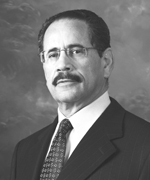
Justice Needham
The San Francisco ruling briefly notes that during the financial crisis the city pension fund plunged from 103 percent funded (market value) in 2008 to 72 percent a year later. A reform approved by 69 percent of voters in 2011 cut costs by limiting a supplemental COLA to years when the system was fully funded.

The supplement adding up to 3.5 percent to the standard cost-of-living adjustment for retirees of up to 2 percent, depending on inflation, had been awarded when pension fund investments during the previous year exceeded expected earnings, then 7.5 percent.

Skimming off “excess” earnings is questionable management, because the excess is needed to offset years with earnings shortfalls or losses. But the San Francisco pension system, which requires voter approval of pension increases, historically has been well funded.

Employers were given a contribution “holiday” from 1996 to 2004, making no payments into the pension fund, another example of questionable management. Measure C in 2011 was supported by all 11 county supervisors and business and labor groups.

A retiree suit to overturn the measure was called “the epitome of greed” by the president of the police union. A superior court ruling upheld the measure, concluding full funding was assumed when voters approved the supplement in 1996, then later increased the supplement and made it permanent.

The appeals court panel found no evidence that full funding had been a condition for the supplement. Following the California rule on vested rights, the panel said the supplement can’t be cut for workers retiring after 1966, but “may” be cut for workers retiring before then.

Last July, the San Francisco retirement board, pointing to the permissive “may,” restored the full supplement for those retiring before 1966. City Controller Ben Rosenfield sued the board for defying the will of voters.

Rosenfield told the San Francisco Chronicle a full supplement for 8,300 workers who retired before November 1966 will cost the city $200 million over the next five years. A superior court enjoined the board action last week.

The Marin ruling, making the case for cost reduction, begins with a look at the “emergence of the unfunded pension liability crisis.” A number of national and state reports on the issue are mentioned in a “background” section.

“In the aftermath of the severe economic downturn of 2008-2009,” said the ruling, “public attention across the nation began to focus on the alarming state of unfunded public pension liabilities.”

(An annual Milliman actuaries report last week said the 100 largest U.S. public pension systems were on average only 70 percent funded as of June 30, with a debt or unfunded liability of $1.38 trillion.

(The giant California Public Employees Retirement System, which does not include the Marin and San Francisco systems, was an estimated 68 percent funded last June with an unfunded liability of $139 billion.)

The longest look in the Marin ruling background section is at a report by the Little Hoover Commission in 2011 warning that “aggressive reforms” are needed to prevent growing pension costs from reducing government services and forcing layoffs.

“To provide immediate savings of the scope needed, state and local governments must have the flexibility to alter future, unaccrued retirement benefits for current workers,” the commission said in its top recommendation.

The Marin ruling cites a number of past court rulings that allowed cuts in the pensions of current workers to give the pension system the flexibility to adjust to changing conditions and preserve “reasonable” pensions in the future.

The previous rulings allowed increases in pension contributions, changes in retirement ages, repeals of COLAs, changes in required service years — even reduction of pensions in 1938 from two-thirds to one-half of salary.

Some public pension lawyers are alarmed by a comment in the Marin ruling on a 1967 appeals court ruling (Santin v. Cranston): “Until retirement, an employee’s entitlement to a pension is subject to change short of actual destruction.”

The Marin ruling said the 1955 Allen v. Long Beach ruling that said pension cuts “should” have a comparable new benefit was changed to “must” in a 1983 state Supreme Court ruling. But all Supreme Court rulings since then say “should” have a new benefit.

“It thus appears unlikely that the Supreme Court’s use of ‘must’ in the 1983 (Allen v. Board of Administration) decision was intended to herald a fundamental doctrinal shift,” the Marin ruling said, citing two rulings that “should” is advisory not compulsory.

In addition, the Marin ruling said the legislative cut in “spiking” gives Marin County employees a new benefit. Employee contributions that helped pay for the “spiking” provisions will no longer be deducted from their paychecks.

“Put simply, the new benefit is an increase in the employee’s net monthly compensation,” said the Marin ruling. “Put even more simply, it is more cash in hand every month.”

A post on the Reason Foundation website by an Emory Law School professor who has studied the California rule, Alexander Volokh, reviews four related cases and suggests the Marin ruling may be reversed.

Volokh argues that some of the previous rulings showing flexibility in the California rule were based on “highly unusual historical circumstance” not present in the Marin case. He said an employee near retirement would only have “more cash in hand” for a short period.

Comparable new benefits were granted in some of the cases cited in the Marin ruling, Volokh said, and other cases refused to make an exception for fiscal emergencies, since they were the government’s own fault and could be remedied by tax increases.

“Anthing can happen on appeal, but it wouldn’t be surprising to see this decision reversed by the Supreme Court,” Volokh said. The Supreme Court has at least 60 days to accept or reject the union appeal for a review of the Marin ruling, received Sept. 28.

Similar consolidated union suits against the Alameda, Contra Costa and Merced county pension systems have been briefed in appeals court but no date for oral arguments has been scheduled.

United Tech Offers Pension Buyouts to Retirees;

United Technologies Corp., in a transaction which will shave $1.77 billion in pension liabilities from the corporation’s books, is transferring its pension obligations to Prudential and offering buyouts to retirees.

A top executive called pension liabilities the “single biggest issue” the company is facing.

From Bloomberg:

United Technologies will shift $775 million of those commitments, covering about 36,000 retirees and beneficiaries, to Prudential in a transaction that’s expected to close Oct. 12, the Farmington, Connecticut-based industrial company said Thursday in a statement. Also, 10,000 participants are expected to take lump-sum offers, reducing the company’s obligation by approximately $1 billion by Dec. 31. United Technologies said it expects to take a pretax settlement charge of about $400 million to $530 million in the fourth quarter.

“This transaction is an important part of United Technologies’ long-term strategy to reduce future pension risk and expense,” Chief Investment Officer Robin Diamonte said in the statement. “It will not affect participants remaining in the plans and entrusts the assets leaving the plans to a highly rated insurance company whose core business is retirement security and administration of pension benefits.”


Deprecated: Function get_magic_quotes_gpc() is deprecated in /home/mhuddelson/public_html/pension360.org/wp-includes/formatting.php on line 3712