Pension Fund Boards Lack Knowledge on Risk, Says Survey

A new State Street survey finds that a third of pension professionals think their fund should increase risk-taking to boost returns.

But less than half of those professionals thought their boards had sophisticated knowledge of investment risk.

From ai-cio.com:

More than a third (36%) of 400 pension professionals from around the world surveyed by the investor services giant said their funds had funding issues requiring greater risk-taking. However, of those people, less than half (43%) said their boards had a “high level of understanding of risks” to their funds. Just 29% of those whose funds were seeking to lower risk said their boards had sophisticated expertise.

“We examined pension funds’ capabilities across four distinct types of risk: investment, liquidity, longevity, and operational risk,” State Street wrote. “For each of these areas, only one-fifth of funds at most consider their risk management to be very effective.”

Large funds were generally better at risk management than small funds, the survey found, while public funds were better than their private sector counterparts.

[…]

A significant proportion of respondents said their employers planned to change the process for recruiting new board members in order to improve their expertise. More than half (53%) of those funds seeking to increase portfolio risk said this was the case.

Kansas May Delay $99 Million Pension Contribution

Kansas is facing a $290 million budget hole, and state Gov. Sam Brownback has proposed three ways to pay it down.

One proposed option included delaying the state’s next $99 million payment to its pension system – a move considered irresponsible by numerous experts briefed on the matter.

More from the Kansas City Star:

Gov. Sam Brownback’s recommended fixes for the latest shortfall center on budget maneuvers and spending cuts, and all have drawn controversy.

[…]

The first option was to sell a portion of the state’s future payments from a national tobacco settlement, which Kansas dedicates to early childhood education programs, to bondholders for a one-time infusion of $158 million. It’s a contentious idea.

A second option would delay a $99 million state payment to the Kansas Public Employees Retirement System until fiscal year 2018. Current retirees’ benefits wouldn’t be affected by the delay, he said.

A third option would make 3 to 5 percent cuts to most state agencies, including funding to K-12 public schools and state universities. A 3 percent reduction to K-12 schools would be about $57 million.

[…]

Putting off a payment to the state pension system is troubling, he said. Even if the state makes up the payment with 8 percent interest in fiscal year 2018 as planned, that just puts stress on a future budget, said [Dave Trabert, president of the conservative-leaning Kansas Policy Institute.]

The option of delaying a $99 million payment to the state’s pension system is irresponsible, said [Annie McKay, executive director of the Kansas Center for Economic Growth].

Brownback said he is not willing to roll back the tax cuts he enacted in 2012 and 2013.

Canada Federal Lawmakers Consider Teaming With Pensions on Infrastructure

A line Canada’s federal budget reveals that lawmakers are considering selling and leasing stakes in the country’s infrastructure to public pension funds as a mechanism for infrastructure improvements, according to the Canadian Press.

Pension360 previously wrote that several of the country’s largest public pension funds – which are, not coincidentally, some of the largest infrastructure investors in the world, had an appetite for such an arrangement.

More from the Canadian Press:

A line tucked into last month’s federal budget reveals the Liberals are considering making public assets available to non-government investors, like public pension funds.

The sentence mentions “asset recycling,” a system designed to raise money to help governments bankroll improvements to existing public infrastructure and, possibly, to build new projects.

“Where it is in the public interest, engage public pension plans and other innovative sources of funding — such as demand management initiatives and asset recycling — to increase the long-term affordability and sustainability of infrastructure in Canada,” reads the sentence in the new Liberal government’s first budget.

[…]

Australia’s asset recycling model has been praised by influential Canadians such as Mark Wiseman, president and CEO of the Canada Pension Plan Investment Board.

“With growing infrastructure deficits worldwide … we often reference this model with our own government and others as one to follow to incent and attract long-term capital,” Wiseman said in prepared remarks of a September speech in Sydney to the Canadian Australian Chamber of Commerce.

Infrastructure investments are a strong fit for public pension funds because they are long-term and offer reliable, steady returns.

CalPERS Splits on Studying Tobacco Reinvestment

Reporter Ed Mendel covered the Capitol in Sacramento for nearly three decades, most recently for the San Diego Union-Tribune. More stories are at Calpensions.com.

Should CalPERS continue a 16-year-old ban on highly profitable tobacco investments or consider reinvesting after a lengthy study, risking a public-relations black eye and controversy?

A committee with all 13 CalPERS board members narrowly approved a staff proposal last week to begin a two-year review of tobacco investments, including outreach to members and others and an economic study costing $500,000 in an initial estimate.

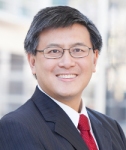
But at the request of state Treasurer John Chiang, a board member and potential Democratic candidate for governor, the chairman of the investment committee, Henry Jones, agreed to reconsider the tobacco issue next month.

“Investing in tobacco companies is harmful to public health and to our fiscal bottom line,” Chiang said in a news release. “Smoking causes addiction, disease and death. No public pension fund should associate itself with an industry that is a magnet for costly litigation, reputational disdain, and government regulators around the world.”

The push from the state treasurer was an echo of the original decision in 2000 to ban tobacco investments. The state treasurer at the time, Phil Angelides, who made an unsuccessful run for governor four years later, led the drive for divestment.
Chiang
The main argument for the ban (approved with a one-vote margin like the review last week) was that tobacco would be an unprofitable investment due to litigation, regulation, and massive health-related settlements with state and local governments.

CalPERS had a surplus then and had infamously, in the view of critics, told the Legislature the previous year that a large retroactive pension increase for state workers, SB 400 in 1999, would not cost “a dime of additional taxpayer money.”

Now CalPERS is underfunded, with 74 percent of the assets needed to pay future pensions in the last report, and concerned that another major economic downturn, like the last one, could drop funding to 50 or 40 percent, making a return to full funding unlikely.

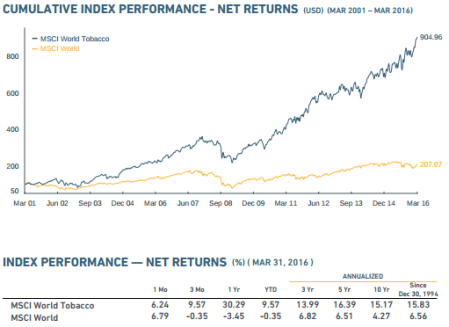
And despite the bleak outlook in 2000, tobacco has been one of the most profitable investment sectors. (see chart below) Analysts say tobacco stocks perform well in downturns, have growing sales in developing nations, and steadily pay big dividends.

“If a large enough proportion of investors avoids sin businesses, their share prices will be depressed, thereby offering the prospect of elevated returns to those less troubled by ethical considerations,” a Cambridge University professor, Elroy Dimson, said in a Credit Suisse report last year on “sin” business investments.

Tobacco’s burden is more than stigma. In 1998, four U.S. tobacco companies agreed to pay $246 billion over 25 years to settle about 40 lawsuits by states to recover medical service costs for smoking-related diseases.

California is one of the states that issued bonds that will be paid off by the tobacco money. A state treasurer’s report in 2007 said California had sold $16.8 billion worth of tobacco securitization bonds, $3.6 billion by 28 local agencies and the rest by the state.

California voters approved a 25-cents-per-pack tobacco tax, Proposition 99 in 1988, for a program to prevent and discourage the use of tobacco. In November 2012 voters narrowly rejected a $1-per-pack tax for cancer research, 49.8 to 50.2 percent.

This year, signatures are being gathered to place a $2-per-pack tobacco tax for public health care on the November ballot.

The new initiative is backed by a union representing public health care workers, SEIU, and Tom Steyer, a billionaire former hedge-fund manager, environmentalist and Democratic campaign donor, who is mentioned as a potential candidate for governor.
Tobacco

An analysis of the California Public Employees Retirement System divestment policy last fall found that the tobacco ban had cost $2 billion to $3 billion through 2014, depending on the methodology used, Wilshire consultants said.

CalPERS staff concluded that the cost of other divestments related to Iran, Sudan, firearms, and emerging market principles are relatively minor (in an investment fund valued at $296 billion last week) and could be reviewed under a general policy.

But the tobacco loss was deemed large enough to merit a separate review. The rationale for the new look at tobacco is the “fiduciary duty” CalPERS board members have under the state constitution to act in the best interests of pension recipients.

A union-backed constitutional amendment, Proposition 162 in 1992, a response to a state budget “raid” on CalPERS funds, made paying pensions the top priority of public pension boards, ahead of what had been an equal goal of minimizing employer costs.

A staff agenda item last week said the constitution states, among other things, that the CalPERS board “ . . . shall diversify the investments . . . so as to minimize the risk of loss and to maximize the rate of return . . .”

A substitute motion by Treasurer Chiang’s representative on the CalPERS board, Grant Boyken, to reject the review and reconsideration of tobacco investments failed on a 6-to-5 vote with one abstention.

“While my heart would absolutely love to support the substitute motion,” said board member Priya Mathur, “I think from a fiduciary perspective process is everything, and it’s really important that we engage in a robust process to review something that has substantial financial implications for the portfolio.”

Mathur’s successful motion called for an expert long-term economic study of tobacco, outreach and education to stakeholders for their input, learning how other institutional investors have offset tobacco losses, and alternatives to tobacco divestment.

The motion also scheduled a board discussion of tobacco divestment in January 2018 and a vote the following the month. Reviews of non-tobacco divestments would be triggered if losses exceed a threshold to be set later.

In the 7-to-4 vote with one abstention, voting “yes” were state Controller Betty Yee, Mathur, Bill Slaton, Dana Hollinger, Rob Feckner, Ron Lind, and Theresa Taylor. Voting “no” were Chiang, J.J. Jelincic, Michael Bilbrey, and Richard Costigan.

Katie Hagen, representing Human Resources director Richard Gillihan, abstained. Following CalPERS custom the committee chairman, Henry Jones, only votes to break a tie.

The California State Teachers Retirement System added a 21st risk factor to its investment policy as the basis for tobacco divestment: an industry product harmful to human health that results in lawsuits, regulation, and avoidance by other investors.

CalSTRS eliminated most tobacco investments by changing its benchmarks in 2000, then completed the divestment in 2009 by banning tobacco investments by active managers. A spokesman said tobacco divestment has cost CalSTRS more than $4 billion.

“CalSTRS is a patient, long-term investor, and the ultimate economic impact of divestment from tobacco cannot yet be determined,” Jack Ehnes, CalSTRS chief executive officer, said in a blog post on Aug. 21, 2013.

“Similarly difficult to assess is the social impact of this action,” he said. “What we do know is that CalSTRS no longer exerts institutional strength in this market sector and cannot attempt to leverage that financial strength to achieve reform.”

Texas Handcuffed on Pension Funding?

A hearing this week in Texas’ House Appropriations Committee shed some light onto the state’s pension funding situation – and the funding limitations that are baked into state law.

Keith Brainard of the National Association of State Retirement Administrators (NASRA) testified that the lower and upper bounds of Texas’ annual pension contributed are defined by law.

From the Houston Chronicle:

Texas — unlike Arizona, Louisiana, Maine and Montana – has set constitutional limits on how much the state will contribute to pension plans: no less than 6 percent and no more than 10 percent of the plan’s cost.

“Texas is the only state in which the constitution limits the state’s ability, the employer’s ability to adequately fund its pension plan,” Brainard said.

That point is critical because of the mounting obligations of the four current pension plans for state employees, of which only one is a pay-as-you-go plan. According to the Employee Retirement System, the debt obligation is $8 billion and growing.

Two rounds of benefit adjustments and an infusion of state cash last session under House Bill 9 have only slowed the growing obligation. Outgoing Appropriations Chair Rep. John Otto, R-Dayton, has pressed hard on the issue of a lump sum appropriation, or increased contribution, to defray the cost of current obligations: The Legislative Budget Board has said no while ERS has said yes.

What is not in doubt is the heavy blow long-term financing will be. Porter Wilson, the new executive director of ERS, noted the current trajectory of funding would pay off current obligations in 2048, at a cost of $29.1 billion. Pump in $1 billion and that obligation drops to $20.7 billion; $4 billion will be $11.7 billion; and an $8 billion infusion would cost $9.5 billion and actuarial soundness in 2018.

View the hearing presentations here.

Stanford Professor Pushing the Case for Cost-Cutting Pension Reform

Reporter Ed Mendel covered the Capitol in Sacramento for nearly three decades, most recently for the San Diego Union-Tribune. More stories are at Calpensions.com.

A leading advocate of the view that public pensions are alarmingly underfunded thinks rising costs could, in the next five to ten years, push some cities into bankruptcy and some states into insolvency.

Joshua Rauh, a Stanford University finance professor, said in a new study issued by the Hoover Institution that 564 state and local pensions systems reported a “net pension liability” of $1.2 trillion under new government accounting rules.

But Rauh believes the debt is nearly three times larger, $3.4 trillion, because the pension systems, even under the new rules, use an overly optimistic annual earnings forecast, 7.4 percent, for investments often expected to pay two-thirds of future pensions.

Rauh used a 3 percent risk-free Treasury bond rate. That not only follows the basic principles of finance, he said, but is more realistic given low interest rates, the failure of pension funding levels to recover after a major bull market, and other factors.

“More and more money is going to have to go into these funds, and you are going to see more and more bankruptcies along the likes of Detroit, San Bernardino, Stockton, California,” Rauh told CNBC last week. “And over a five- to ten-year horizon, I would expect there to be a number — many, many more cities going bankrupt and many states that are insolvent.”

Rauh
Most state and local governments in the nationwide study contribute 7.5 percent of their revenue to pensions, Rauh’s study concluded, but need to contribute 17.5 percent to keep pension liabilities from rising.

“Even contributions of this magnitude would not begin to pay down the trillions of dollars of unfunded legacy liabilities,” he said. None of the “50 worst cities” listed in the study, ranked by additional contributions needed to prevent more debt, are in California.

An oncoming wave of bankruptcies may be an extreme view, not to mention a 3 percent long-term earnings forecast. But a Citigroup study last month shares Rauh’s view that exposing “hidden” pension debt is a first step toward public pension reform.

Citigroup estimates that the total unfunded government pension liabilities for 20 industrialized countries is a “staggering $78 trillion,” nearly double the $44 trillion they have reported.

“Making these contingent liabilities more clear or complete is the first step towards further pension reform to address the increased risks from a rising dependency ratio (retirees vs. active workers) and a rising cost burden of public pension systems,” said Citigroup.

Last week, a state Senate committee rejected a bill requiring the nonpartisan Legislative Analyst’s Office to create an internet website listing major state debt, including pensions and retiree health care, that also would be shown on a page in the ballot pamphlet.

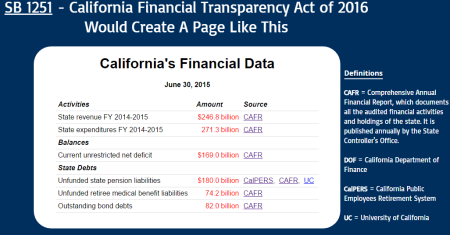
State Sen. John Moorlach, R-Costa Mesa, said his “California Financial Transparency Act” (SB 1251) would give voters “basic reliable nonpartisan financial information” as they consider bonds, spending measures, and candidates.

Moorlach, an accountant and financial planner known for predicting that risky investments would lead to the Orange County bankruptcy in 1994, created a website to show what the basic financial information might look like.

The bill, rejected on a party-line vote, was opposed by public employee unions who argued that ballot measures have a nonpartisan financial analysis and that the broad debt numbers have no direct relation to ballot measures, lack context and might confuse voters.

SB1251

Pension debt can seem distant, with most bills not due for decades, and unpredictable or even unknowable as the reported unfunded liability swings up and down with the stock market and the yield from huge investment funds.

The bite taken from employer budgets by annual contributions to the pension funds is less abstract. Some call it “crowd-out” as growing pension costs reduce the money available for basic government programs, services and personnel.

Stephen Eide of the Manhattan Institute issued a California Crowd-Out study last year that found, among other things, government staffing in December 2014 remained 8 percent below the December 2007 level, while private-sector jobs were 2.4 percent higher.

The “crowd-out” from pension and retiree health care costs was an issue as voters in San Diego and San Jose overwhelmingly approved cost-cutting pension reforms four years ago.

The ballot pamphlet argument in San Diego said Proposition B means more money for “fixing potholes and street repairs, maintaining infrastructure, restoring library hours, and re-opening park and recreation facilities.”

In San Jose, the ballot argument for Measure B said: “Retirement costs consume more than 20% of the general fund and are projected by independent actuaries to increase for years. This is unsustainable.”

With “spiking,” pension excess becomes even less abstract and gets a face. For example, an Orinda-Moraga fire chief, who retired in 2009 at age 50 with a pension much larger than his salary, told the Wall Street Journal he was a “poster child” for spiking but didn’t make the rules.

Last September, the Contra Costa pension board voted to reduce Peter Nowicki’s initial pension, $240,923 a year, to an amount, $172,818, that is below his final base pay, $193,281.

A review by a law firm found that Nowicki, with two contract amendments, inflated the final pay used to calculate his pension, mainly by cashing out unused vacation time with smaller amounts from holiday, terminal and retroactive base pay.

Manipulating final pay to improperly boost pensions is a common spiking method, surfacing sporadically in well-publicized incidents over the past half century. The two big state pension systems, CalPERS and CalSTRS, both have anti-spiking units.

Implied pension excess surfaces in several ways. The Los Angeles Times reported this month that at least 17 legislators including Moorlach are “double-dipping,” collecting their state salaries and a public pension from another government job or office.

The “$100,000 pension club” of retirees with big pensions was posted on the internet a decade ago by a reform group led by Marcia Fritz. Another group, Transparent California, now has a searchable database of state and local government pay and pensions.

“The main thing is to engage people when you talk about pensions, because it’s boring to people,” Fritz, president of the California Foundation for Fiscal Responsibility said in 2011. “When we put the list up, it was the same reaction as ours — unbelievable.”

Whether through debt, crowd-out or excess, the public seems to have received a message about pensions from somewhere.

A statewide Public Policy Institute of California poll issued in January 2014 found that 85 percent of likely voters think the amount of money spent on public pensions is somewhat of a problem and 73 percent support switching new hires to a 401(k) plan.

CalPERS Postpones Tobacco Study; Raises Contribution Rates

CalPERS on Wednesday postponed a plan to study whether it should re-invest in tobacco-related assets after divesting from such assets 15 years ago.

On Thursday, the pension fund also approved a contribution rate increase for state government and school districts.

The Sacramento Bee reports on the postponement of the tobacco study:

The big California pension fund Wednesday unexpectedly postponed a plan, adopted two days earlier, to launch an extensive study of whether it should reinvest in tobacco company stocks. Instead, the CalPERS investment committee will discuss the issue again May 16, said CalPERS spokeswoman Rosanna Westmoreland.

On Monday, the investment committee voted to begin a 12- to 24-month study of the pluses and minuses of tobacco investments. The vote followed a consultant’s report saying the California Public Employees’ Retirement System had sacrificed $3 billion in profits by deciding in 2001 to dump its tobacco holdings.

The investment committee consists of every CalPERS board member. As a result, approval by the full board usually is a formality. But this time it wasn’t. The representative for State Treasurer John Chiang, who opposed Monday’s decision, asked investment committee chairman Henry Jones to hold off until next month. Jones, who is also vice president of the full board, agreed.

“No public pension fund should associate itself with an industry that is a magnet for costly litigation, reputational disdain and government regulators around the globe,” Chiang said later Wednesday in a prepared statement.

A different report from the Bee also outlines the rate increase:

The state’s contribution will increase by an estimated $602 million, to $5.4 billion a year. School districts will be charged an additional $342 million, to a total of nearly $1.7 billion a year. While teachers are covered by CalSTRS, other school employees get their pensions from CalPERS.

It’s the latest in a series of rate hikes implemented by the California Public Employees’ Retirement System in recent years, primarily to cover longer retiree lifespans, salary increases and the growing pool of state and school district employees. CalPERS is also dealing with lingering financial fallout from the 2008 financial crash, which cost the pension fund tens of billions of dollars.

The rate increase is smaller than initial projections, according to CalPERS.

Pension Debt Ruling Has Implications for Private Equity

Late last month, a federal judge ruled that private equity funds are liable for the pension debt of their portfolio companies.

Observers say the ruling could shake up the private equity industry.

The legal nuts and bolts are outlined in this Lexology article; but a New York Times piece provides a more down-to-earth explanation of what this means for private equity:

Late last month, Judge Douglas P. Woodlock of the United States District Court in Massachusetts found that two private equity funds were jointly liable for the pension fund debt of one of the companies they acquired.

“The private equity world is all over this,” said Paul Secunda, a labor law and employee benefits expert at Marquette University Law School. “For everybody else, it’s like, what’s the big deal?”

To answer that, it helps to go back to the beginning of the story.

It started with a Rhode Island company, Scott Brass, which makes brass and copper for all sorts of industries. In 2007, an affiliate of the private equity firm Sun Capital Partners bought Scott Brass, splitting the ownership between two separate Sun Capital funds.

A year later, Scott Brass went bankrupt and stopped contributing to its pension fund, run by the New England Teamsters and Trucking Industry Pension Fund.

Federal law imposes pension liability on any “trade or business” that is under “common control” with Scott Brass. The pension fund argued that Sun Capital’s funds met that definition — and should be liable for the $4.5 million pension fund debt.

In 2013, the United States Court of Appeals for the First Circuit found that one of Sun’s funds did constitute a “trade or business” — the first time a private equity fund was classified as such. The appeals court sent the case back to a lower court to decide whether Sun’s other fund was “a trade or business” as well.

On March 28, Judge Woodlock found not only that the other fund’s activities met the test of being “a trade or business,” he also found that the two funds served as a “partnership in fact” — one that was under common control with Scott Brass. That made the funds liable for the pension debt.

And what does the ruling mean, if it’s upheld? From the New York Times:

Two years ago, the appeals court’s opinion drew a flurry of attention over whether the Sun Capital case would challenge the foundation of the private equity business model by changing how it is taxed. That’s because the appeals court relied on federal income tax principles to conclude that Sun’s private equity fund was a “trade or business” for the purposes of employee benefits law.

In theory, if the I.R.S. were to adopt the same reasoning in a tax context, it could kill the goose that lays the golden eggs of the private equity industry: its huge tax breaks. It could do it in a way that would turn the investing world upside down.

And that’s why it probably will not happen, said Gregg D. Polsky, a tax law professor at the University of North Carolina School of Law who has written critically about the industry’s practices.

“It could create all sorts of potential headaches and uncertainties for investors,” Professor Polsky said, including foreign investors and tax-exempt investors like university endowments. “I don’t think the I.R.S. is interested in doing that.”

Until now, private equity firms have looked at companies with underfunded pension plans as undervalued targets, because the private equity firms were not responsible for funding those plans once they took over the company. Now they know they might be if Judge Woodlock’s ruling is upheld on appeal, and if other courts adopt it.

Building on CPPIB’s Success?

Leo Kolivakis is a blogger, trader and independent senior pension and investment analyst. This post was originally published at Pension Pulse.

Adam Mayers of the Toronto Star reports, CPP’s success may signal bigger pensions ahead:

The Canada Pension Plan expects to have assets worth $1 trillion before the middle of this century.

As recently as 17 years ago, in the first year of the plan’s Investment Board, there was just $18 million in the bank. All that money was invested in Canadian government bonds. The CPP Investment Board was a coupon clipper.

Today, our national retirement scheme is a global giant, closing in on $300 billion. By 2030 it projects to be worth $500 billion. Two-thirds of all it owns is outside Canada and there isn’t a corner of the globe where it doesn’t look for opportunity.

We get royalties from intellectual property, dividends from public and private investments. Its biggest single public stock holding worth $2.3 billion is in IMS Holdings, an American company that provides IT services to the global healthcare industry. Number two is Apple.

Our plan invests in Japanese drug companies, owns nursing homes in France and seniors’ apartments in Florida. There are 17 ports in Britain, Ontario’s 407 ETR and toll roads in Chile. Its real estate holdings include prestige shopping centres and office towers in many global capitals. There is income from investments in farmland, software and internet and telecom networks. It owns stakes in electrical utilities and water treatment plants.

Based on this success — and our contributions — the CPPIB’s actuaries believe there will be enough money to pay pension obligations at current levels for the next 75 years. That’s an enviable position when many national pension plans are in trouble.

But the CPP wants to go further. It wants an even better return. So, it’s changing the mix of its investments to add more stocks and private companies, and fewer government and corporate bonds.

It’s a “modest evolution” being done in a “prudent and gradual manner,” says the CPPIB’s senior managing director Ed Cass, who is responsible for the CPPIB’s overall investment strategy.

He says it can be done safely because the CPP has deep pockets and a perpetual time horizon: The “next quarter” is 25 years, not three months.

This may eventually mean a bigger pension, or lower CPP premiums for us. Cass can’t say. The CPPIB’s mandate is to safely and profitably invest on our behalf. Ottawa and the premiers decide how much we get and how much we pay into the plan. Their third option is do nothing and keep the additional funds for a rainy day.

We sat down with Cass, who at 53 is as eclectic as the CPP’s holdings: He holds a degree in theoretical physics from Queen’s University and a law degree from Osgoode Hall.

Here’s an edited version:

What can average investors learn from the CPP?

Well, they can’t replicate what we do because we have advantages of size and scale.

But there are three things. The most important is risk tolerance. A 27-year-old should be able to take a lot more risk than a 91-year-old. We have a 75 year time horizon and so our assumptions are based on that.

The second is diversify. Diversification is the one free lunch.

It’s true, we can go to a level that’s impossible for the small investor. But there’s a ton of things individuals can do. Through Exchange Traded Funds (ETFs) you can get access to the U.S., European and Japanese stock markets. Importantly, you get diversification in terms of currency exposure.

The last thing is patience. If you can afford to be patient, be patient. If you’re changing your portfolio frequently it’s likely you’re incurring a lot of costs. Having a plan and sticking to it is very important.

What is your view of the economic outlook?

There are a number of forces that give us a lot of optimism. We think the gradual convergence of emerging market economies with developed markets is a positive development.

We think low rates may persist in the short term, but not over the long term. We see growth coming back. Not quite what we experienced in previous decades, but something approaching that.

What about interest rates?

The new normal for the overnight bank rate might be 3.50 per cent or 3.75 per cent. (That rate is currently 0.5 per cent and determines consumer rates.)

When might this happen?

Forecasting the path of rates is fraught with danger. We are confident that over our horizon, which is decades, things will normalize.

Why are you buying ports and university dorms?

They are things that are similar to bonds and have very predictable payments. As an example, take the Highway 407 (40 per cent owned by CPP). It is very easy to predict cash flow over time and it has a high income yield. That looks a lot like a bond.

The CPPIB has decided to take more investment risk. What does that mean?

Risk appetite is linked to investment horizon. We have a very long horizon, somewhere in the order of 75 years. That’s how far we look out.

Our default reference was 65 per cent equities and 35 per cent bonds, which is the (default) of an average investor. But our capacity to prudently take risk is greater than an average investor. So, we want to move to 85 per cent equities and 15 per cent bonds.

What it means is that we want a very diversified portfolio, a very safe portfolio, but one that targets a higher risk appetite than in the past.

Why now?

This is not a reaction to the current environment. This is something more fundamental. It’s predicated on those longer term views.

When you say “why now” you must place it in the context of an organization that is on an enduring path. We have undertaken several transitions since that first transfer of funds 17 years ago.

We’ve gone from 100 per cent bonds to a diversified portfolio, and from all domestic to truly global. We’ve grown from $18 million to over $280 billion today. We accomplished this in less than two decades.

So, when you consider the shift along the return/risk spectrum in this light, it is really a modest evolution. We have an exceptionally long horizon, as well as a certainty of assets. As a result, the Board concluded we can and should seek higher returns prudently.

Does that mean better pensions?

If the fund is widely successful you could increase benefits, or reduce contributions. Those are the two most logical things, but that’s a policy decision. Our statutory objective is to maximize returns without undue risk of loss.

A good interview with Ed Cass who was appointed to the position of Senior Vice President and Chief Investment Strategist at CPPIB a little over two years ago.

Mr. Cass is obviously a very smart guy, holding a Bachelor of Science (Honours) degree in Theoretical Physics from Queen’s University and a Bachelor of Laws from Osgoode Hall Law School, but the message he lays out here is very simple and clear: CPPIB is a global powerhouse with deep pockets and a very long investment horizon and can take risks in public and private markets and patiently sit through any economic cycle.

Now, I think it’s important Canadians understand some of the key takeaways from this brief interview (I will add some insights):

  • CPPIB is a global powerhouse that invests across public and private assets. It invests and co-invests with top private equity funds, top hedge funds, and invests directly in real estate, infrastructure and natural resource assets all over the world. This diversification across geographies and public and private markets and the ability to invest directly in large transactions is something that no individual Canadian investor and even mutual fund can do at the scale and scope of CPPIB.
  • CPPIB has huge comparative advantages over mutual funds, private equity funds, and even other large Canadian pension funds. You can read about these advantages here.
  • CPPIB is massive but cost efficient. Never mind that flimsy and grossly biased study from the Fraser Institute claiming it is an extremely costly plan. Real experts who understand large pensions like Keith Ambachtsheer and his partners at KPA Advisory Services tore into that study as did I for its dumb comparisons and faulty conclusions (word to the wise: never blindly trust anything that comes out of the Fraser Institute which is bankrolled by Canada’s powerful financial services industry that has its own agenda on pensions).
  • CPPIB is opportunistic and very patient. Go back to read my comments on CPPIB bringing good things to life and a more recent one on CPPIB going on a massive agri hunt. These are huge, scalable deals that no Canadian mutual fund can engage in and to be honest, apart from PSP Investments, very few other large Canadian pension funds can engage in.
  • CPPIB has a great leader at its helm. I won’t hide it, I like Mark Wiseman and think very highly of him. We don’t always see eye to eye on everything but when I talk to him and listen carefully to what he says, he comes across as an exceptionally bright, nice, hard-working leader who really understands and believes in the long view and has done an outstanding job leading this mammoth pension fund. He has put in place the right people to lead his teams and they are all doing a great job.

As far as what Ed Cass says on interest rates, I beg to differ as I think ultra low rates and the new negative normal are here to stay for years, especially once the global deflation tsunami hits us.

Then again, with China manipulating its stock market and central banks fighting deflation tooth and nail, things might be a lot better in the global economy than meets the eye. I trade stocks every day and I’m baffled at some the moves in the resource sector.

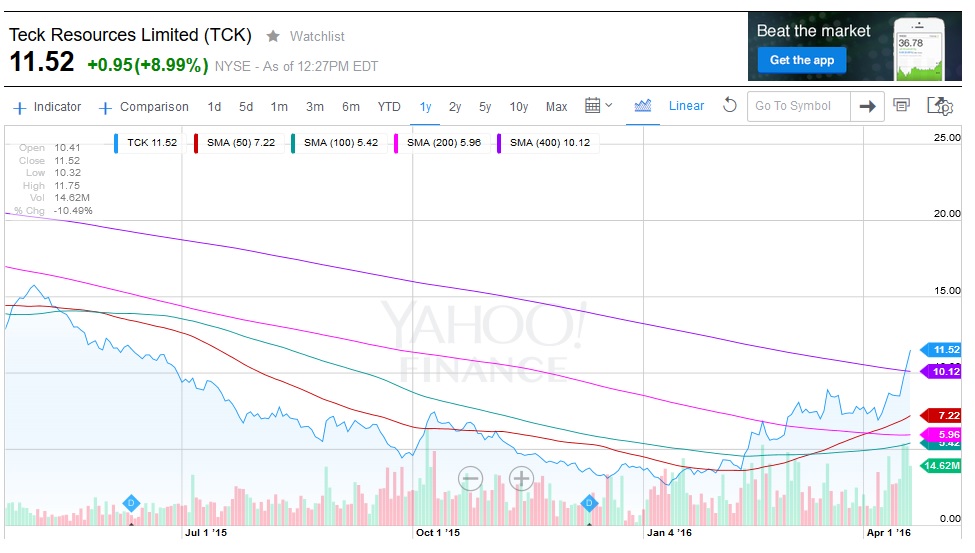
For example, shares of Teck Resources (TCK) are up another 9% at this writing on Wednesday mid-day (click on image):

Amazingly, the share price of Teck hit a low of $2.56 (USD; I only trade U.S. shares even though it was best to buy this one in Canada earlier this year) on January 13th and is now breaking out and in a position to make a new 52-week high if this momentum carries through.

And it’s not just Teck, a sample of stocks I track leveraged to global growth are indeed acting as if oil will double this year and the global economic recovery is well under way (click on image):

I remain highly skeptical of all these counter-trend rallies no matter how powerful they are and think they’re largely driven by algos and momo traders. Having said this, one Canadian hedge fund manager told me this morning: “Things have changed, adapt and leave it alone.”

Maybe things have changed, maybe the world is in much better shape than we think, or maybe we are all smoking some hopium like those nuns I mentioned in my last comment on China’s pension gamble, believing in fairy tales and unicorns. I don’t know but since mid-January the explosive moves have been in emerging markets (EEM), Chinese shares (FXI), energy (XLE), metals and mining (XME) and industrials (XLI).

So, Ed Cass is right, focus on ETFs, diversify and rebalance your portfolio when there are huge market dislocations like we had at the start of the year. Unlike him, I prefer to play U.S. ETFs (I am long USD over a very long period because I think the U.S. has the best economy by far) and I would say rebalance every time an ETF goes way above it 200-day moving average or way below its 400-day moving average (for oversold trends, I prefer using the 400-day moving average).

As far as books, I have about 300 books on finance but the ones I recommend to individuals are classics like William Bernstein’s The Four Pillars of Investing and The Intelligent Asset Allocator or Marc Litchenfeld’s Get Rich With Dividends. Of course, a simple and cheap classic to read on stocks is Peter Lynch’s One Up on Wall Street (a real classic). 

On that note, it’s back to the stock market for me and trying to make sense of these schizoid markets driven by algos, high frequency traders and unscrupulous hedge fund sharks.

Multiemployer Pension Funding Took Hit in 2nd Half of 2015

The aggregate funding status of the country’s multiemployer pension plans dropped 4 percent in the second half of 2015, according to a report by Milliman.

[See the report here.]

The aggregate funding level now sits at 75 percent; the funding drop was due to flat investment returns.

More from Pensions & Investments:

“Multiemployer plans continued to be stuck in a rut in 2015,” said Kevin Campe, principal and consulting actuary at Milliman and co-author of the report, in a news release. “Currently, at least 76 plans with $28 billion of shortfall are projected to be insolvent at some point. These plans may be beyond help at this point, and several more may be headed in this direction.”

As of Dec. 31, 192 plans were more than 100% funded with an aggregate surplus of roughly $4 billion, down from 279 plans with an aggregate surplus of roughly $6 billion as of June 30.

Also as of Dec. 31, 264 plans were less than 65% funded, with an aggregate shortfall of $77 billion, accounting for more than half of the $151 billion aggregate shortfall for all multiemployer pension plans, and up from 214 plans as of June 30.

For the funding ratio to remain at 75% at the end of 2016, the pension funds would have to achieve an aggregate 5.5% return in 2016, Milliman estimated. Returns of 11% or more for the year are needed to return to the 79% level seen as of June 30, 2015. A flat return could lower the funding ratio to approximately 72%; a -5% return could drop the funding ratio below 70%. For the first month and a half of 2016, the assessed plans returned roughly -3% in aggregate, Milliman noted.

Read the full study here.


Deprecated: Function get_magic_quotes_gpc() is deprecated in /home/mhuddelson/public_html/pension360.org/wp-includes/formatting.php on line 3712